
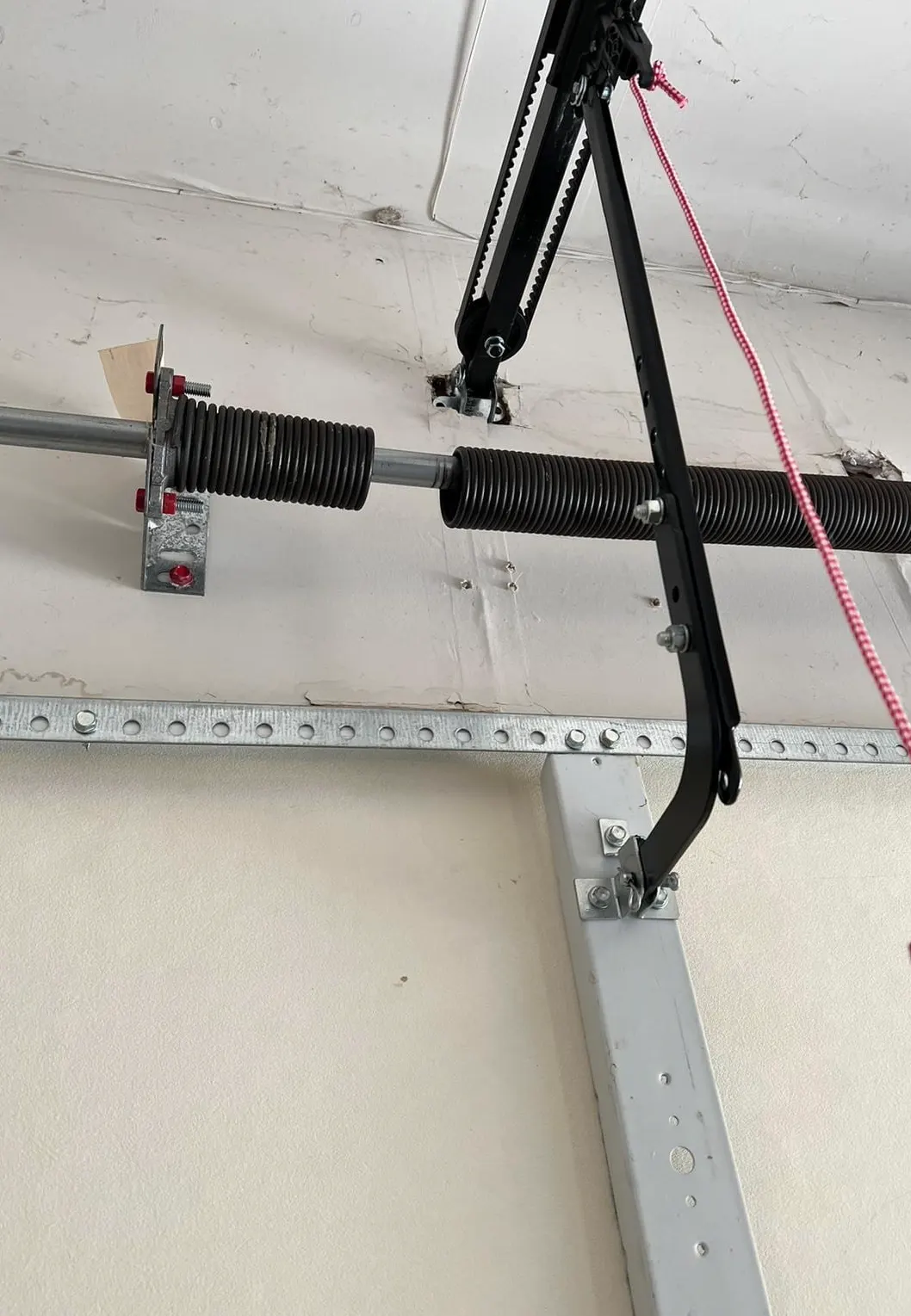
Rule of thumb: if you disconnect the opener and the door won't stay put wherever you leave it, your door is out of balance. The exceptions are doors with very new or very worn weatherstripping (which adds friction that can mask a balance problem) and doors on a slope or uneven slab, where the door may drift slightly even when the springs are fine. Outside of those two situations, a door that creeps up, drifts down, or slams shut on its own is telling you the springs are no longer doing their job.
Why Balance Matters More Than People Think
A properly balanced garage door is designed so the springs carry almost all of the door's weight. The opener's motor is only supposed to provide a small nudge to start and guide the movement — not lift the door itself. When a door is out of balance, the opener has to work much harder every single cycle. Over weeks and months that shows up as a motor that runs hot, gears that strip, a trolley or belt that wears out early, and a door that reverses unexpectedly because the opener's force sensors think something is blocking it.
In this part of Florida, that strain adds up faster than it might elsewhere. Heavier wind-rated doors already ask more of the spring system, and humidity swings between a muggy afternoon and an air-conditioned evening can cause wood and wood-composite doors to swell slightly, changing both their weight distribution and how smoothly they ride in the track. Salt air near the coast also speeds up corrosion on spring coils, which changes tension over time even if the door looks fine from the outside. None of that is dramatic on its own, but it means a balance check that would be optional in a drier climate is worth doing more regularly here.
Tools You'll Need
- A step stool or short ladder (only if you can't comfortably reach the release cord)
- Work gloves
- A flashlight
- A pencil or piece of tape to mark a reference point on the track (optional but helpful)
How to Test Garage Door Balance, Step by Step
- Close the door completely. Start from a fully closed position so you have a clean baseline.
- Find the manual release cord (usually a red handle hanging from the trolley on the opener rail) and pull it to disconnect the door from the opener. This lets you move the door by hand without the motor fighting you or helping you.
- Lift the door by hand to about waist height, roughly three to four feet off the ground. Use slow, even force — don't yank it.
- Let go and watch what happens. A balanced door will stay exactly where you left it, or drift no more than an inch or two in either direction. An unbalanced door will either fall back toward the ground or shoot upward on its own.
- Repeat the test at a second point — about a quarter of the way open and again near fully open. Springs can be fine at one height and off at another, especially if a cable has slipped or one spring is weaker than its pair.
- Reconnect the opener by pulling the release cord again (or following the latch-back instructions on your specific opener) once you're done testing.
While you're out there with the flashlight, it's worth doing a quick visual pass too: look at the torsion spring above the door for visible rust, gaps between coils, or a spring that looks stretched compared to its neighbor. Check the cables on either side of the door for fraying or looseness. Note any daylight gaps between the rollers and the track, which can signal a bent track rather than a spring issue.
What You Can Safely Check — and What's a Technician's Job
Running the lift test, listening for grinding or popping sounds, and doing a visual inspection for rust or fraying are all safe for a homeowner to handle. These don't put you anywhere near the stored energy in the system.
Adjusting or replacing springs is not a DIY job, full stop. Torsion springs in particular are wound under extreme tension, and the winding bars and clamps needed to safely adjust them require training most homeowners don't have and shouldn't need. The same goes for replacing cables, since they're under tension too and connected directly to the spring system. If your balance test shows a problem, the safe move is to leave the door disconnected from the opener (so it doesn't keep straining the motor) and call in a technician rather than attempting a spring adjustment yourself.
When to Call Naples Overhead Door Co
If your door fails the balance test, drifts noticeably, or you've spotted rust or fraying on the springs and cables, that's the point to call us rather than keep running the opener through its paces. Our Garage Door Spring Repair service covers diagnosing which spring or cable is causing the imbalance, replacing it with the correct tension rating for your door's weight and wind-load requirements, and resetting the whole system so the opener goes back to doing a light, supporting job instead of heavy lifting. For homes where the door has been running fine but it's been a while since anyone's looked at the springs, cables, and rollers together, our Garage Door Maintenance & Tune-Up catches wear before it turns into a stuck door at 6 a.m. before an afternoon storm rolls in.
If your garage door in Naples, Marco Island, Bonita Springs, Estero, Fort Myers, Golden Gate, Immokalee, or Ave Maria isn't passing the balance test, give Naples Overhead Door Co a call. We'll get out, diagnose it properly, and get your door — and your opener — back to doing their jobs the right way.